จีนเร่งเปิดศูนย์ฝึกทักษะ แล้วอเมริกาล่ะเป็นอย่างไร
จีนเร่งเปิดศูนย์ฝึกทักษะ แล้วอเมริกาล่ะเป็นอย่างไร? ..
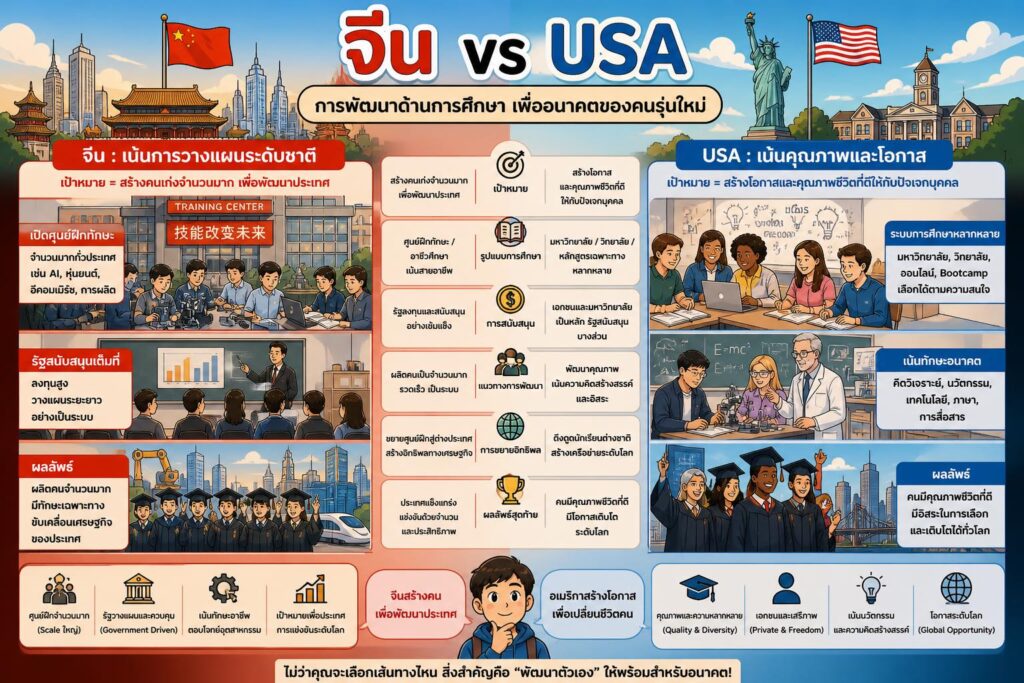
ประเทศจีน กำลังเดินหน้าขยายกลยุทธ์ด้านการพัฒนาทรัพยากรมนุษย์อย่างรวดเร็ว ด้วยการเปิดศูนย์ฝึกอบรมจำนวนมากทั่วประเทศ โดยมีรายงานว่าอาจมีมากถึง 38 สาขาใหม่ ซึ่งเน้นการพัฒนาทักษะด้านปัญญาประดิษฐ์ (AI), หุ่นยนต์, อีคอมเมิร์ซ และอุตสาหกรรมการผลิต เป้าหมายสำคัญคือการสร้างแรงงานที่มีทักษะสูงในระดับจำนวนมาก เพื่อแข่งขันในเวทีโลก ศูนย์เหล่านี้ได้รับการสนับสนุนจากภาครัฐ ทำให้จีนสามารถพัฒนาคนได้เป็นล้านคนต่อปี และขยายอิทธิพลทางเศรษฐกิจทั้งในและต่างประเทศ
ในขณะที่สหรัฐอเมริกามีแนวทางที่แตกต่างออกไป โดยไม่ได้เน้นการขยายศูนย์ฝึกแบบรวมศูนย์ แต่ใช้ระบบมหาวิทยาลัย วิทยาลัยชุมชน และภาคเอกชน เช่น coding bootcamp หรือการฝึกอบรมจากบริษัทชั้นนำ แม้จำนวนสาขาอาจไม่มากเท่าจีน แต่อเมริกามีจุดแข็งที่สำคัญคือ “โอกาส” ผู้เรียนจะได้รับทั้งทักษะ ประสบการณ์จริง มุมมองระดับโลก และโอกาสในการต่อยอดชีวิตในระยะยาว
สุดท้ายแล้ว จีนเน้นการผลิตคนเก่งในจำนวนมาก แต่อเมริกาสร้างโอกาสที่เปลี่ยนชีวิต สำหรับนักเรียนต่างชาติ โดยเฉพาะผู้ที่ถือวีซ่า B1 หรือ J1 การเปลี่ยนสถานะเป็น F1 ถือเป็นก้าวสำคัญในการสร้างอนาคตในอเมริกา
China Expands Training Centers: What About the U.S.?
China is rapidly expanding its workforce development strategy by launching dozens of new training centers across the country. Reports suggest projects reaching up to 38 new branches, focusing on vocational skills such as artificial intelligence, robotics, digital commerce, and manufacturing. The goal is clear: build a large-scale, highly skilled workforce that can compete globally. These centers are often supported by government policy, allowing China to train millions of workers each year and strengthen its economic influence both domestically and internationally.
In contrast, the United States follows a different model. Instead of centralized expansion, the U.S. relies on universities, community colleges, and private sector programs such as coding bootcamps and corporate training. While the number of new branches may not match China’s scale, the U.S. offers something uniquely powerful—opportunity. Students in America gain not only skills but also real-world experience, global exposure, and potential long-term pathways for living and working in the country.
Ultimately, China focuses on producing skilled workers at scale, while the U.S. emphasizes quality education and life-changing opportunities. For international students, especially those already in the U.S. on B1 or J1 visas, transitioning to an F1 student visa can be a strategic step toward building a future in America.
_______________________________________________________________________
ช่องทางติดต่อ Rakoonda
Facebook Page : https://www.facebook.com/RakoondaUSA
Facebook Group : https://www.facebook.com/groups/1181942718927131
Facebook Group : https://www.facebook.com/groups/1181942718927131
Line : https://lin.ee/Hl2zXmz
Youtube : https://www.youtube.com/@Rakoonda
Website : https://rakoonda.co
Website : https://in9.co
_______________________________________________________________________